Content pillar
Trading Journal Basics: Definition, Benefits & Mistakes
What a trading journal is, why the habit matters, how to review weekly, and the mistakes that kill consistency.
Updated 2026-10-12 · TradeLogger Research
Quick answer
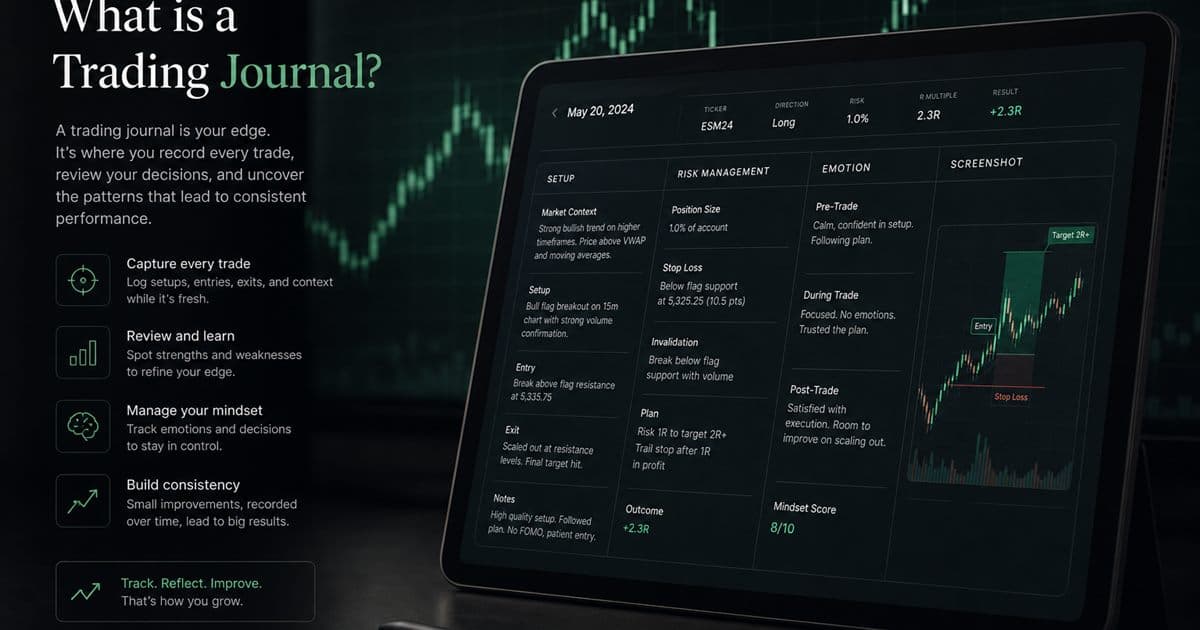
Trading journal basics are the definition, the benefit, the review cadence, and the failure modes. A log tracks fills and P&L. A journal also records setup, context, emotion, and lessons so behavior can change. Read these spokes before you compare software.
This cluster is the awareness layer under the foundational guide to trading journals. It answers meaning, benefits, review cadence, and mistakes before you pick Excel, an app, or a prop-firm workflow. Read in order: definition, why it matters, weekly review, then the failure modes that quietly bias the sample.
What is a trading journal?
A trading journal is a structured record of every trade: fills plus the rationale, risk, context, and lesson. It is not a P&L spreadsheet. The job is to step back from execution and inspect process—what you planned, what you did, and whether the rule survived contact with the session.
Start with what a trade journal is if you need the definition and field list. Use why a trading journal is important when the question is motivation after a red week. A stock trading diary is the same habit with equity-specific notes; the structure does not change.
How should you review a trading journal each week?
Log the same day. Spend 30–60 minutes weekly so one rule or lesson still affects next week. Grade process before P&L, group by setup and session, open the charts behind outliers, and pick one observable action. Monthly reviews find larger patterns; they do not replace the weekly loop.
The checklist lives in how to review a trading journal weekly. If you want the skill loop rather than the journal fields, how to actually get good at trading ties journaling to practice, not to motivational slogans.
What trading journal mistakes should you avoid?
The habit fails from incomplete fields, delayed logging, reviewing only P&L, drifting setup names, and logging only the memorable trades. Those errors bias the sample before any dashboard runs. Fix the process first; software cannot repair a journal you only fill on green days.
Work through trading journal mistakes before you buy a tool. When the bottleneck is columns rather than behavior, move to the trading journal template. When capture friction is the issue, the software hub is next—not a second basics page.
Guides in this cluster
- Seriously: How to Master Trading
The unglamorous path to better trading: define one setup, control risk, collect evidence, review mistakes, and repeat long enough to improve.
- What Is a Trading Journal? Definition, Fields, and Examples
A complete definition of a trading journal, the fields it should contain, how it differs from broker history, and how to start.
- Why a Trading Journal Is Important: 6 Practical Benefits
The value of trading journals for discipline, psychology, and risk management—and what they simply cannot accomplish.
- How to Review a Trading Journal Weekly
A weekly review checklist, designed for 30–60 minutes, that converts your trade logs into specific rules for the following week.
- 7 Common Trading Journal Pitfalls That Obscure Your True Outcomes
Seven typical trading journal errors—and how they mess up your review—plus a practical workflow for creating records that are both complete and truly comparable.
- Trading Journal Guide: Setting Up a Review System That Endures
Learn what to record, how to choose between spreadsheets and software, and how to turn trade evidence into a practical weekly review.
- Stock Trading Diary: Fields, Examples, and Weekly Review
You should structure your stock trading diary by analyzing catalysts, assessing risk in R, documenting chart evidence, reviewing execution quality, and conducting a repeatable weekly review.
Frequently asked questions
Is a trading log the same as a trading journal?+
No. A log usually tracks fills and P&L. A journal also captures setup, context, emotion, and review notes—the data you need if you want behavior to change.
What should beginners write first?+
Start with symbol, direction, risk in R, setup name, one emotion tag, and a screenshot. Expand columns only when a weekly question demands them.
Does journaling make you a better trader?+
It improves evidence and process awareness. It does not guarantee profitability. Strategy, execution, costs, risk, and discipline still decide outcomes.