Fundamentals · 10 min read
What Is a Trading Journal? Complete Guide for Traders
What is a trading journal—and what is a trade journal? Definition, components, and how to start.
Updated 2026-07-17 · TradeLogger Research
Quick answer
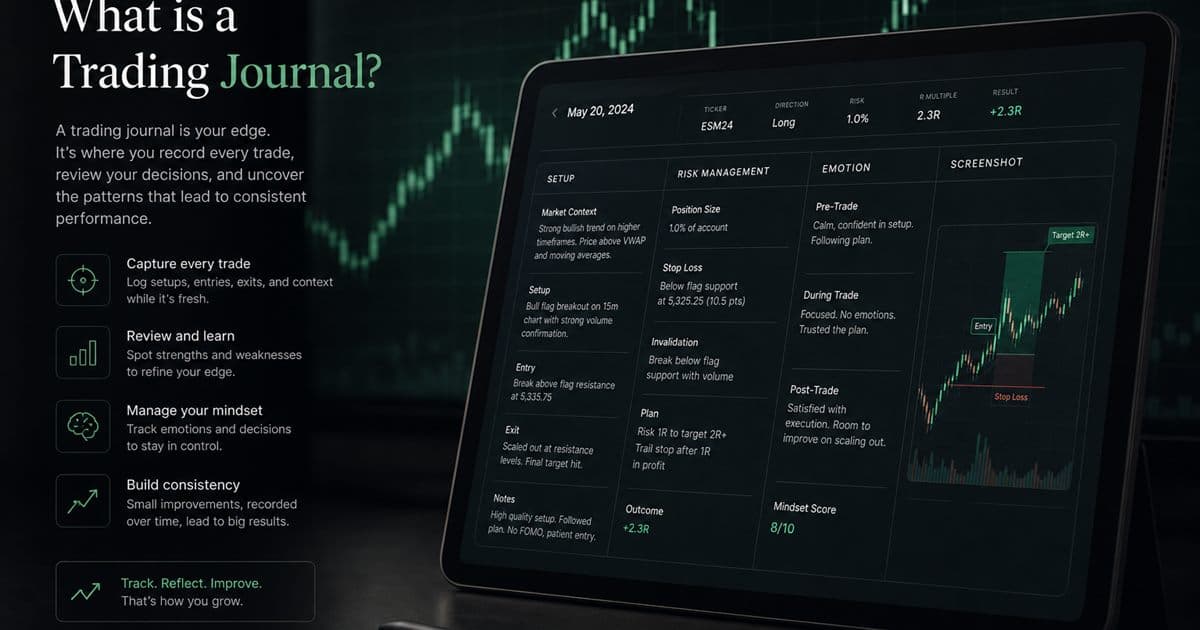
A trading journal (or trade journal) is a structured log of each trade’s setup, risk, context, emotion, and outcome used to improve decision quality — not just record P&L.
A trading journal is how serious traders replace stories with evidence. It captures what you planned, what you did, and what you felt — so next week’s rules are based on data.
Core components
- Trade facts: symbol, side, size, prices, fees
- Plan facts: setup, invalidation, target logic
- Context: session, news, higher-timeframe bias
- Psychology: emotion tags before/after
- Evidence: chart screenshots
- Review: lesson and rule experiment
How to start in one evening
- Write your setup list (even if only three names)
- Create a template with minimum fields
- Decide same-day logging rule
- Book a weekly review block on the calendar
Common beginner mistakes
Overbuilding columns, skipping screenshots, and reviewing only winners. See the mistakes guide for fixes.
Frequently asked questions
What is a trade journal vs trading journal?+
Same idea. Both mean a structured record of trades and the decisions behind them.
What is the difference between a trading log and a journal?+
A log stores fills. A journal adds context, psychology, screenshots, and review notes.
How do I start today?+
Pick five fields, screenshot every trade, and schedule a weekly review. Expand columns only after the habit sticks.
Related guides
- Why a Trading Journal Is Important for Traders
Why is a trading journal important? Psychology, discipline, and evidence-based improvement.
- Trading Journal Template (Excel & Sheets Ready)
A practical trading journal template with the exact columns we use — Excel/Sheets friendly — plus when to move screenshots into software.
- Best Free Trading Journal: Template First, Then Upgrade
Honest free trading journal options — spreadsheet template, free tiers, and when paying for screenshot software is cheaper than broken habits.
- Trading Journal Guide: Template, Excel & Software
Complete trading journal guide: what it is, why it matters, templates, Excel, and journaling software.
Start a structured journal
TradeLogger turns screenshots into searchable trade records.
Create account